Music as an Emotional Outlet
Nieuwe burenMusic as an Emotional Outlet is a recurring means by which Peter and those around him encounter feelings that ordinary conversation cannot resolve. It offers him distance from painful experience, accompanies a return of hope, and gives grief an audible form; for Steef, it is explicitly a source of survival. Music does not remove loss or settle disagreements. Instead, songs make emotion present, sometimes privately and sometimes as a force shared among people.
Lyrics and Emotional Distance
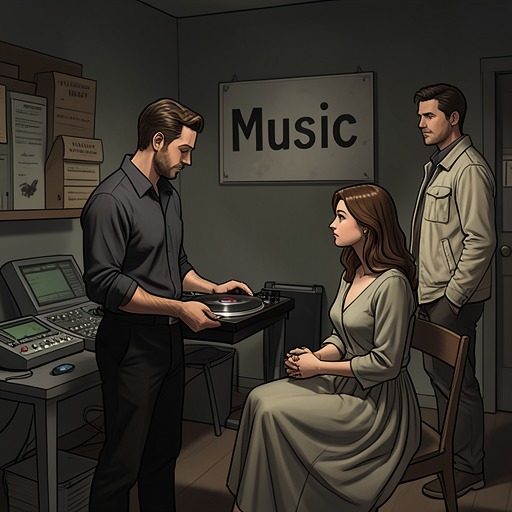
Peter’s connection to music predates the crises of his adult life. At secondary school, he imagined doing something with music and spent all his money on two turntables, a mixer, four speakers, an amplifier, lighting effects, and a disco ball. He later worked as a disc jockey. Although that career belongs to the past, music remains active in his inner life: in absurd situations, fragments of lyrics enter his thoughts, a tic he traces to his DJ years.
One such fragment is the line associated with The Who’s I Hope I Die Before I Get Old. The recurrence is more than musical recollection. Peter describes it as distracting him and producing a sense of separation from reality, as if he were an actor in a film who could step out at any moment. Music thus offers an unstable kind of shelter: it does not change what is happening, but it lets him experience a little distance from it. The lyric’s reference to death also gives that escape an uneasy edge, rather than making it simple comfort.
That inward retreat contrasts with the silence between Peter and Eva. Their conversations have narrowed to their childlessness and the death of their daughter; other subjects are taboo or become occasions for reproach. When Eva wants to leave a café filled with families, pregnant women, and fathers with buggies, Peter is relieved to have a practical task and pays the bill. Their walk to the car is physically side by side but emotionally apart. In this setting, music gives Peter an inner track where shared speech has failed, but it cannot by itself restore their communication.
Songs in Grief and Renewal
After a session with Hetty, Peter drives with the window open and Guns N’ Roses playing. For the first time in years, he feels the summer; he wants to call Steef, go on holiday, cycle across the heath, eat out with Eva, find a new job, and attend a concert. The song accompanies a sudden sense that his stalled world might begin moving again. His thoughts turn toward a different shared plan with Eva: adoption, understood not as a second-best substitute but as another choice they could make together.
The renewed motion does not erase the loss that remains at the center of their marriage. As Peter drives, Sweet Child O’ Mine becomes the song of their daughter, Lieve, and of promises the song once carried. Its sound leads him to her grave in the children’s section of the cemetery. Eva has maintained the grave, where pink flowers sit between two plastic Disney dwarfs; Peter brings a white rose and places it by the stone. He has not visited since the funeral, and touching the cold stone leaves him conscious of guilt rather than the love he wants to feel for a child he never had the chance to know. The song brings him to the grave, but it does not supply a simple emotional resolution.
Music as Survival
For Steef, music is not merely a diversion from distress but a stated alternative to therapy. After describing what he experienced in Srebrenica and urging Peter and Rebecca to fight against death and make the most of life, he takes them to the music. He calls music his salvation and recommends U2. The appeal follows his account of surviving danger and witnessing mass death, linking music to his insistence that being alive is a reason to keep struggling.
Steef chooses A Beautiful Day from U2’s All That You Can’t Leave Behind. He says the song carried him through his crisis and asks Rebecca to have it played at his funeral if he dies. The request holds survival and mortality together: he names a song that helped him endure while imagining the ceremony that would follow his death. When it begins, Steef clenches his fists and raises them; Peter turns the volume up. Sem cries, and Rebecca lifts him from the buggy and kisses his head. The scene does not establish that the song causes each response, but it places their different gestures within a shared moment of listening.
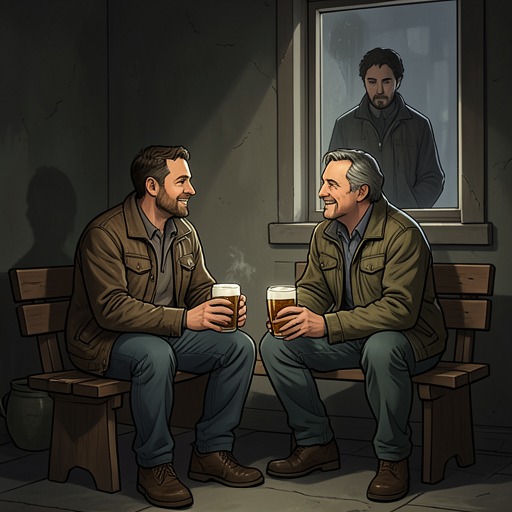
Peter’s response becomes bodily and social as well. He grins at his reflection in the kitchen window, presses cold beer bottles against his hot neck, and watches Steef and Peter dance together with their eyes closed while Rebecca looks on. The experience opens a possibility for him: that he could love more than one person at once. He also feels that, with Rebecca, he need not minimize his grief, and he recognizes that these near-strangers are trusting him where other friends have withdrawn because they could not bear his sorrow. Music accompanies an encounter in which private pain is not argued away but allowed to exist among other people.
Musical Taste, Memory, and Difference
Music also marks the difference between Peter and Steef. Peter recalls that his last pop concert was Pink Floyd’s 1994 Division Bell tour, an overwhelming two hours that made him reluctant to see another band. He calls Pink Floyd the world’s best band and Wish You Were Here the finest song. Steef rejects that preference and favors U2. Their recurring arguments about bands and guitarists make musical judgment part of their friendship: taste gives them a subject on which to tease and challenge each other without sharing the same answers.
The contrast helps explain why music functions differently for each man. Peter’s attachments are bound to remembered performances, old favorites, and songs that return him to his daughter; Steef’s account emphasizes a contemporary band and a song that helped him through crisis. Neither position cancels the other. Across these scenes, music is at once a private habit, a route into grief, a reason to imagine a future, and a means of being present with others. Its emotional force lies not in a single universal meaning but in the distinct histories Peter and Steef bring to the songs they choose.